 PocketMeshGet the app
MESHCENTRAL CLIENT FOR ANDROID
MeshCentral,
in your pocket.
A native Android app for the MeshCentral server you already run. View every device, pull up a terminal or remote desktop, and move files, all from one app, without a mobile browser tab left open or a cloud relay in between.
PocketMesh is a companion app for MeshCentral and does not work by itself.
SEE IT IN ACTION
Watch a quick video walkthrough.
WHAT IS POCKETMESH
MeshCentral, without the browser.
PocketMesh connects straight to your existing MeshCentral server over the same control and relay protocols its web dashboard uses. There's no separate account to create and no data passing through anyone else's servers, it's your device list, your terminal sessions, your files, and your event history, just built for your Android phone instead of a browser window.
WHY IT EXISTS
A real client, not a browser wrapper.
Managing devices from a phone browser means pinch-zooming a desktop dashboard and fighting mobile Chrome for every tap. PocketMesh isn't a WebView wrapper, it implements MeshCentral's actual wire protocols directly: the control API, the relay tunnel handshake, and the binary KVM framing, so the terminal, remote desktop, and file browser all behave like a real native app.
WHAT TO KNOW
A couple quick notes.
- Requires a MeshCentral server to connect to (not a standalone app).
- Needs a network path to that server: local Wi-Fi, VPN, or a reverse proxy.
- No ads, no analytics, no extra account to create.
- Not every button and option is in this app. This app is not a replacement for the MeshCentral web UI.
Device management
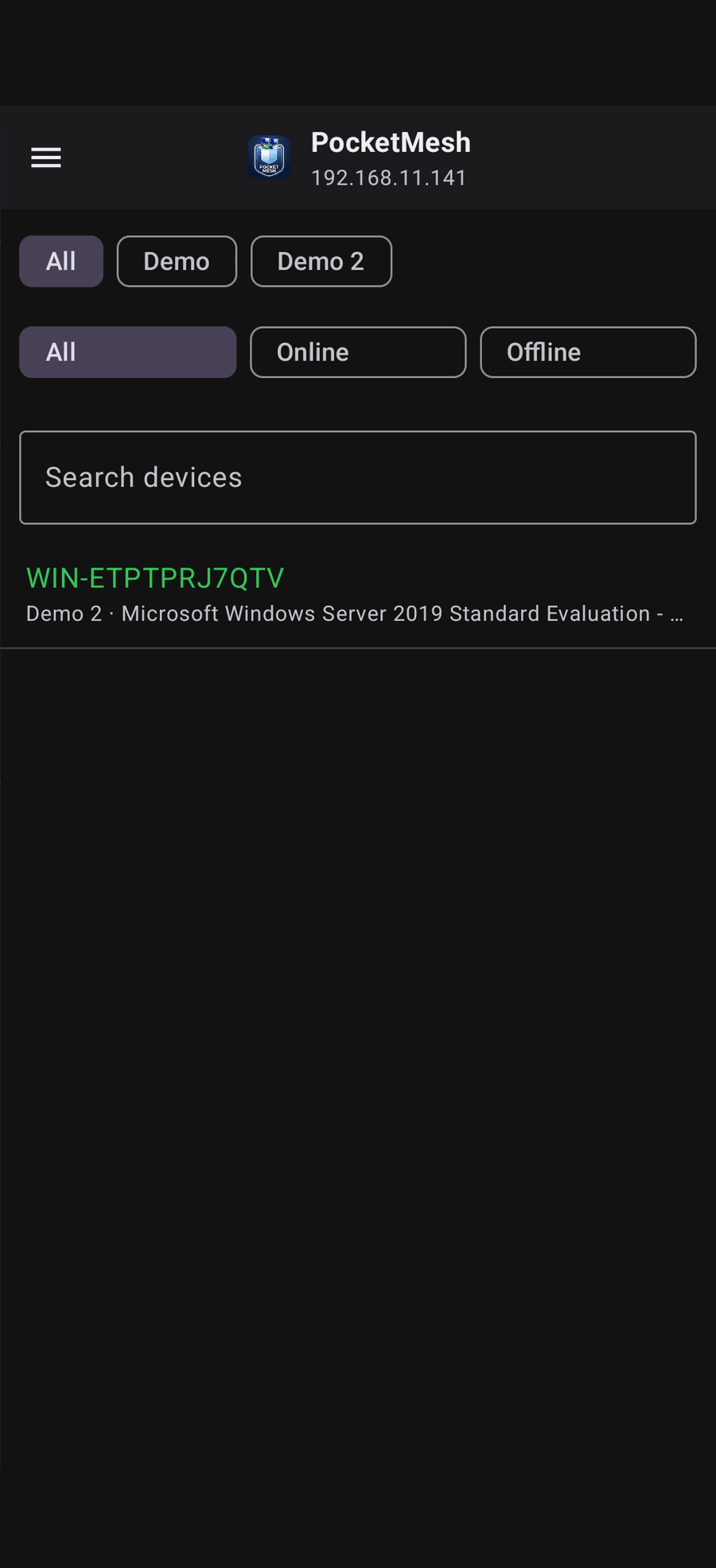
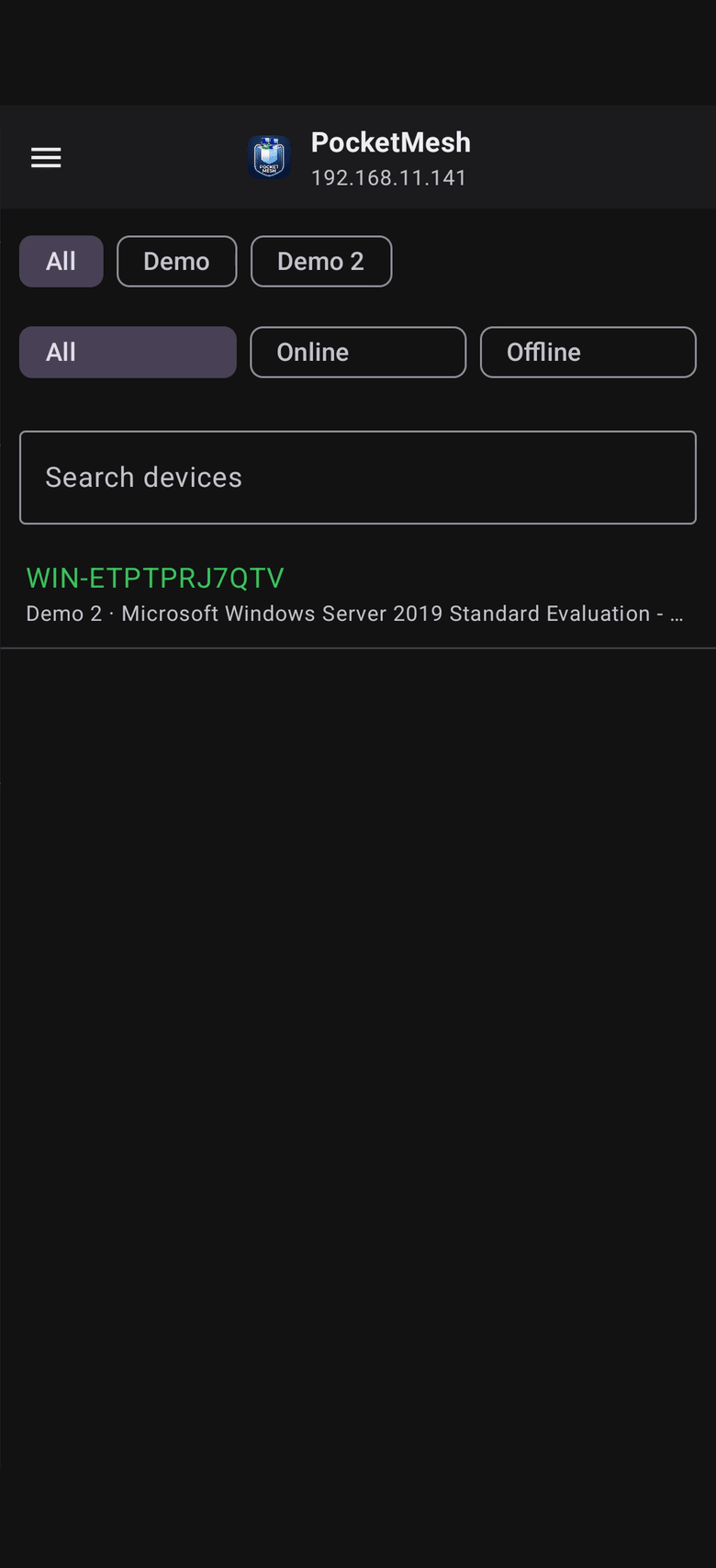
Wake, sleep, restart, shut down, uninstall, and delete devices. Send a toast notification, or run a remote shell command, all from the device list.
Remote desktop (KVM)
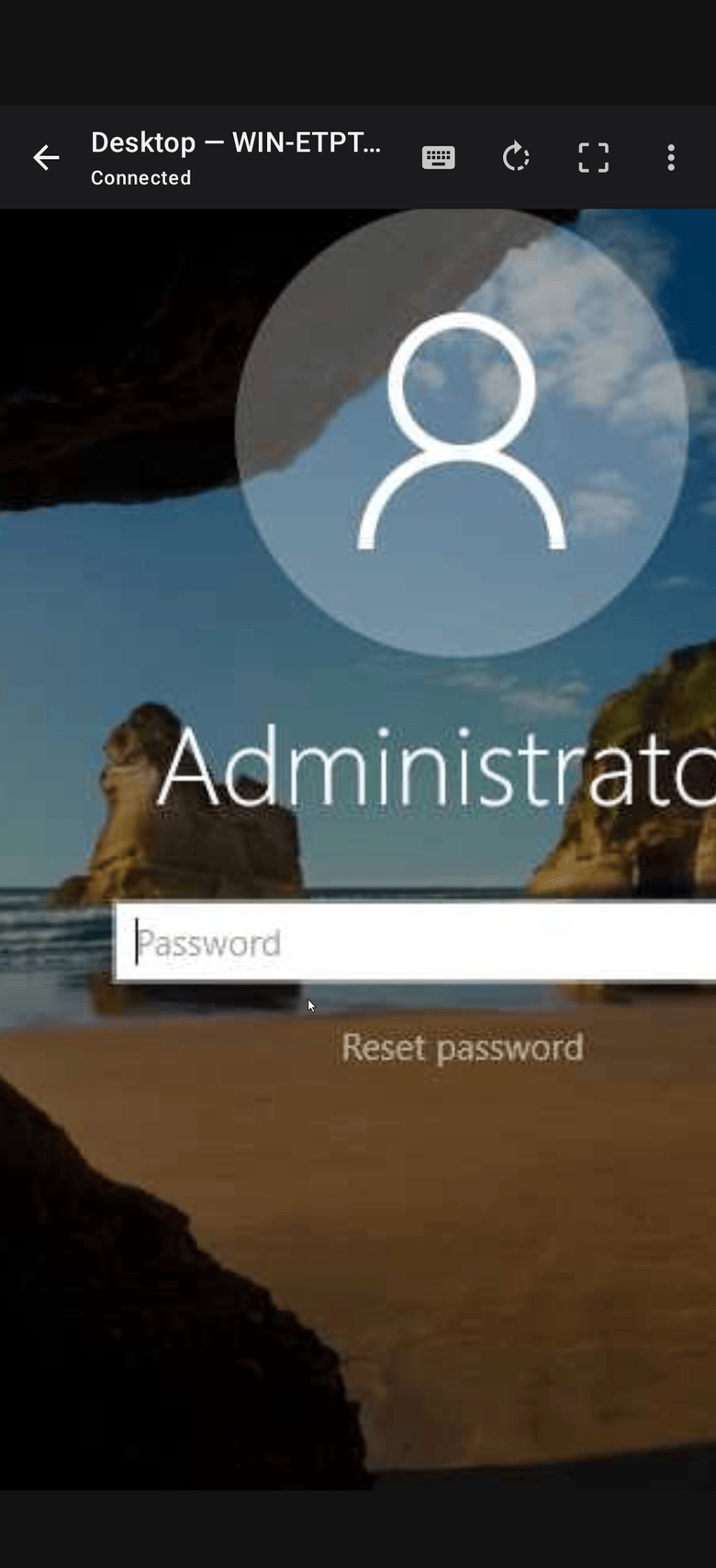
Live screen viewing with a trackpad-style cursor. Supports tap to click, drag to move, pinch to zoom, and 2 finger tap for right click. Send key combos like Ctrl+Alt+Del, and inject text.
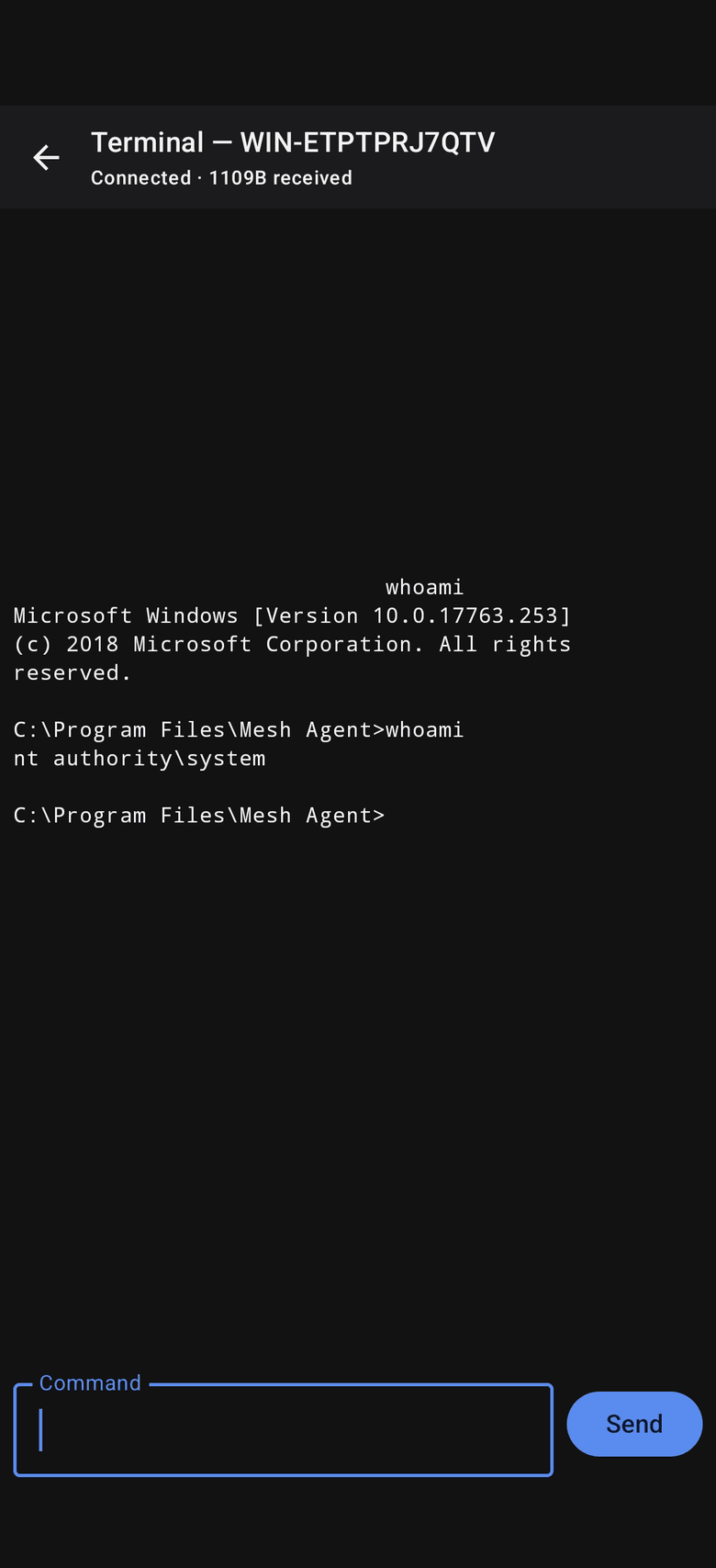
Terminal
A real remote shell session over MeshCentral’s relay tunnel.
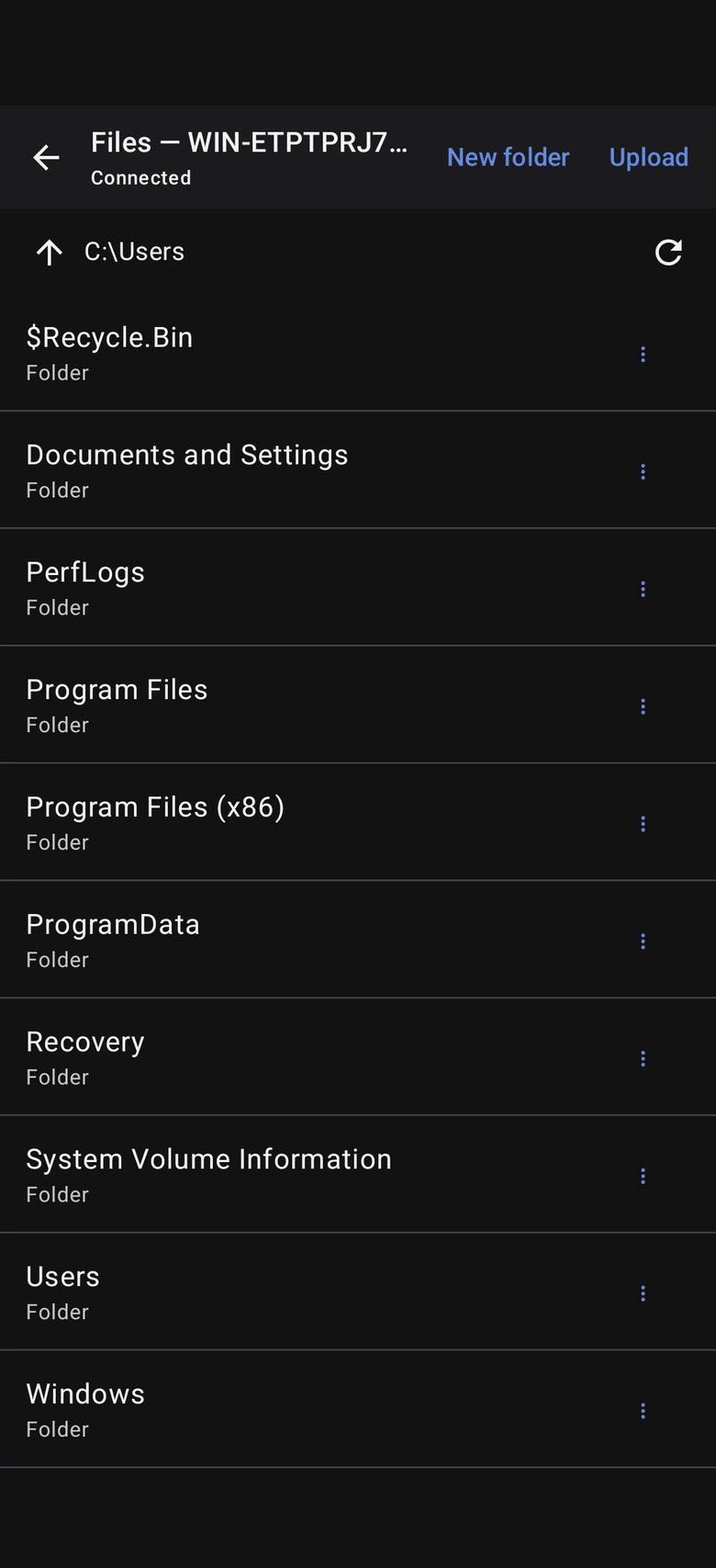
File transfer
Browse remote directories, create folders, rename, delete, upload, and download, straight from your phone.
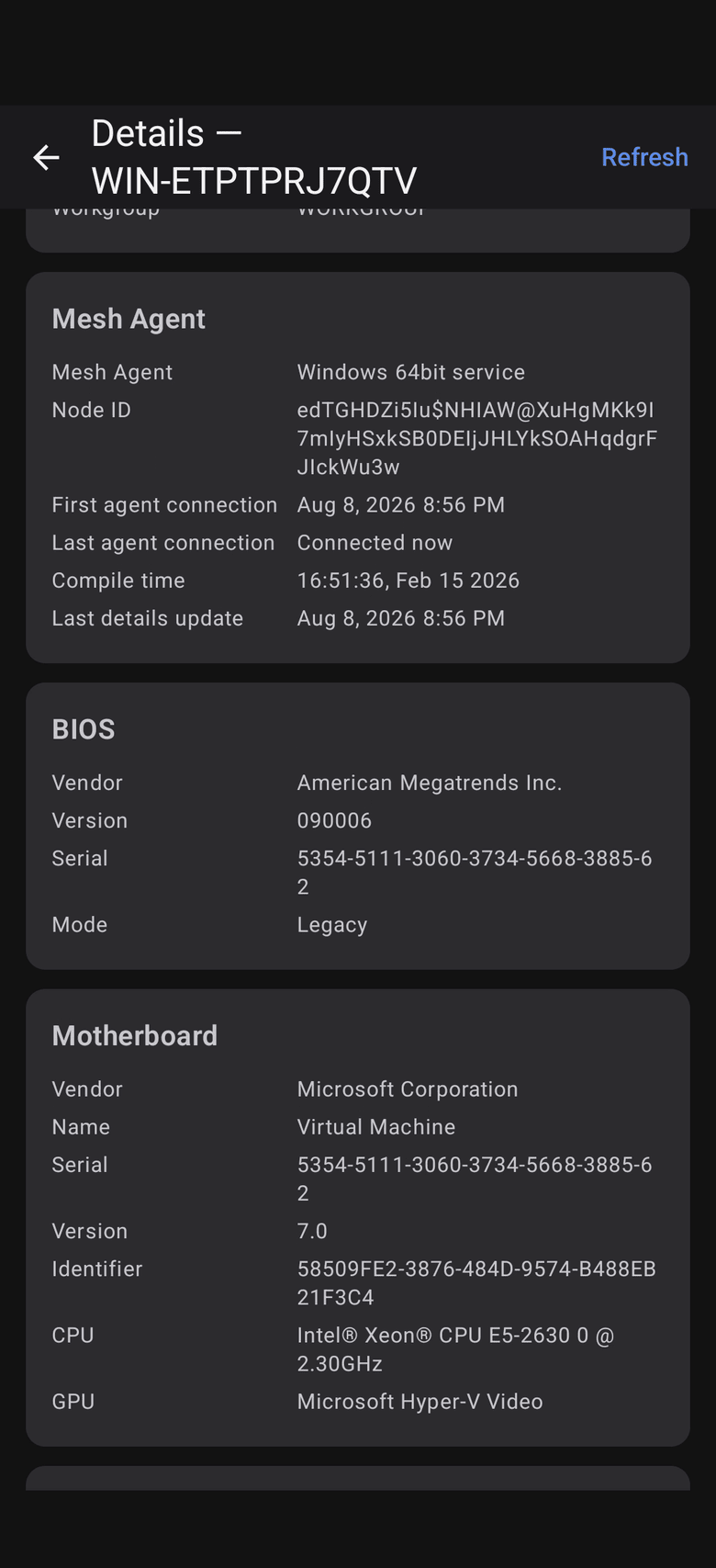
Hardware details
OS, BIOS, motherboard, memory, storage, TPM, software, network interfaces, and battery information for every device.
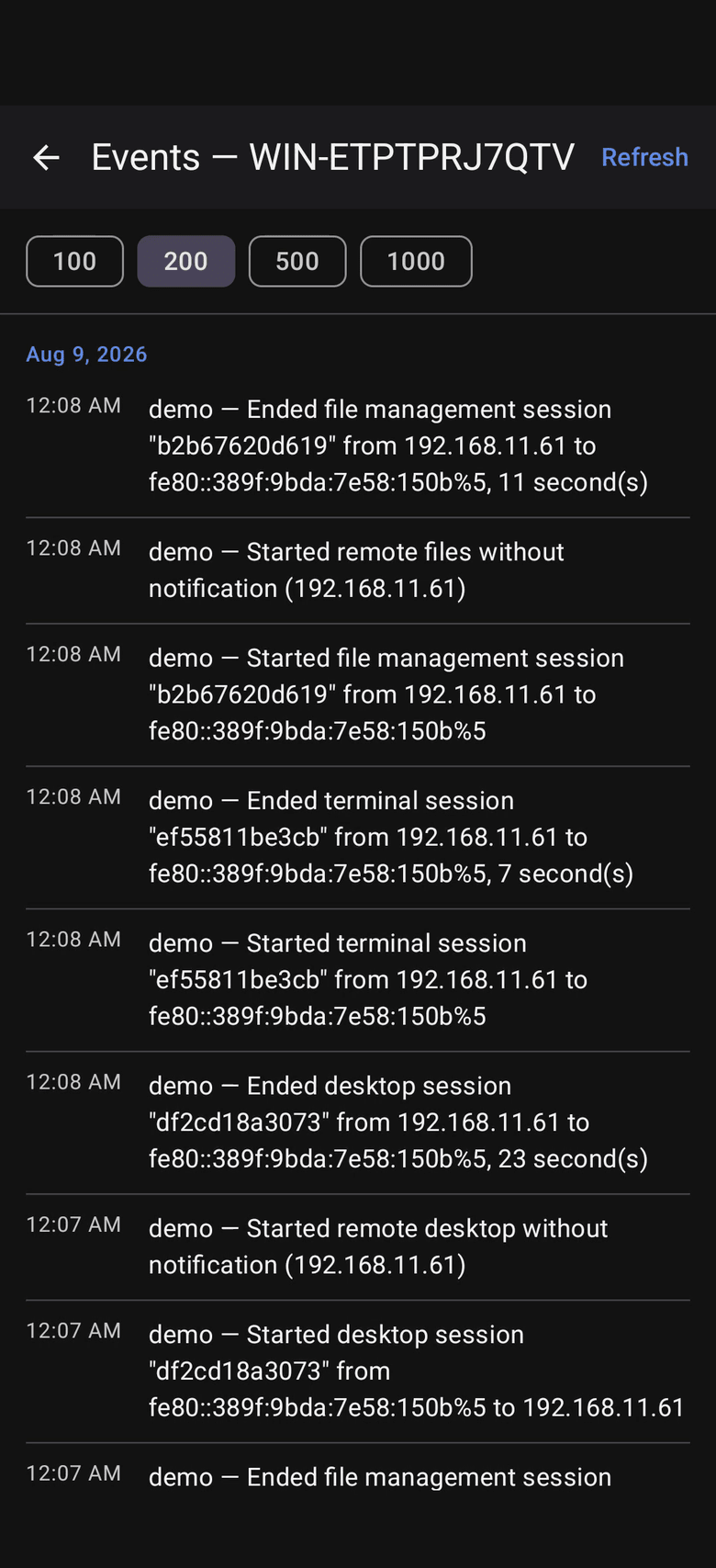
Event log & power history
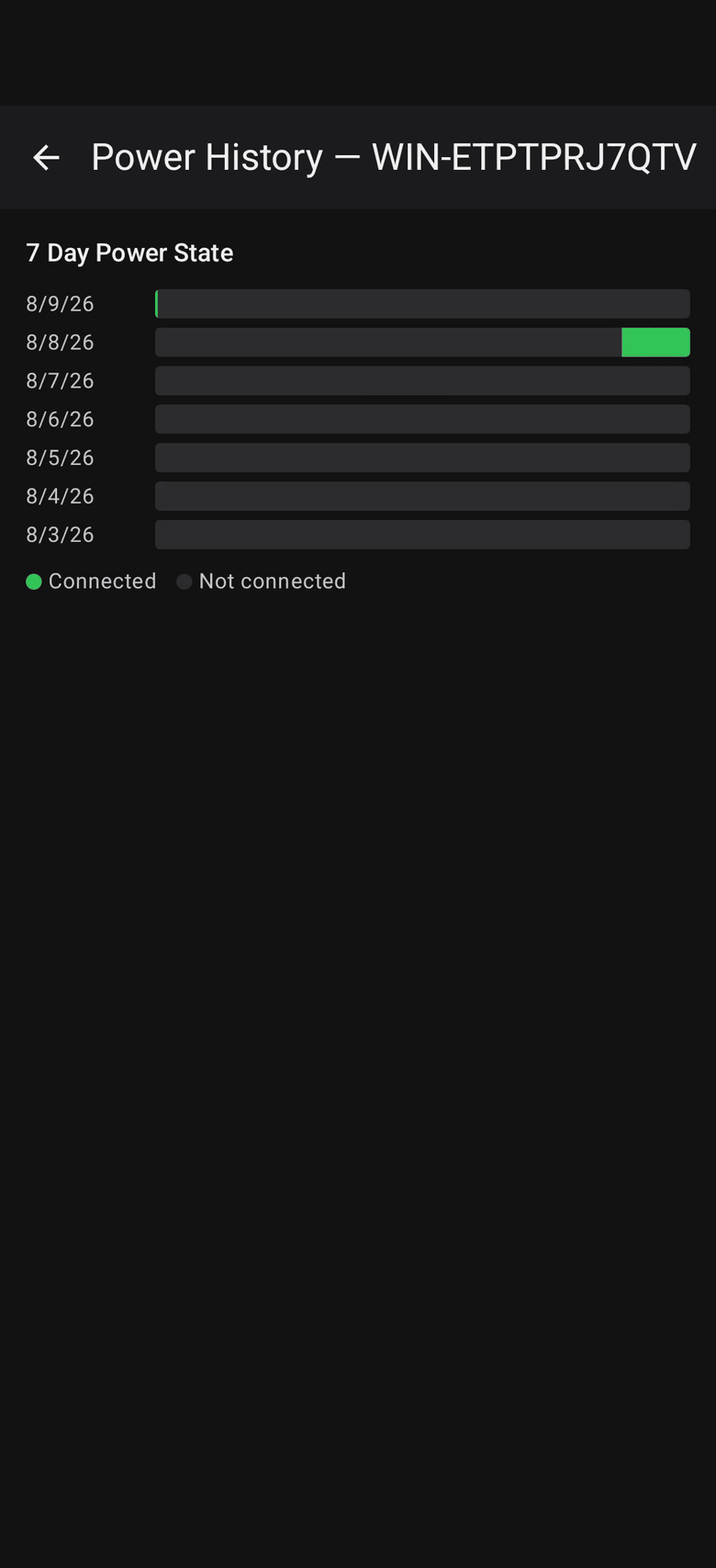
A date-grouped event log per device, plus the same 7-day connected/not-connected chart the web UI shows.
Login Tokens & automatic 2FA
Sign in once and PocketMesh mints a MeshCentral Login Token, so reconnects don’t ask for your one-time code again.
Biometric lock & encrypted storage
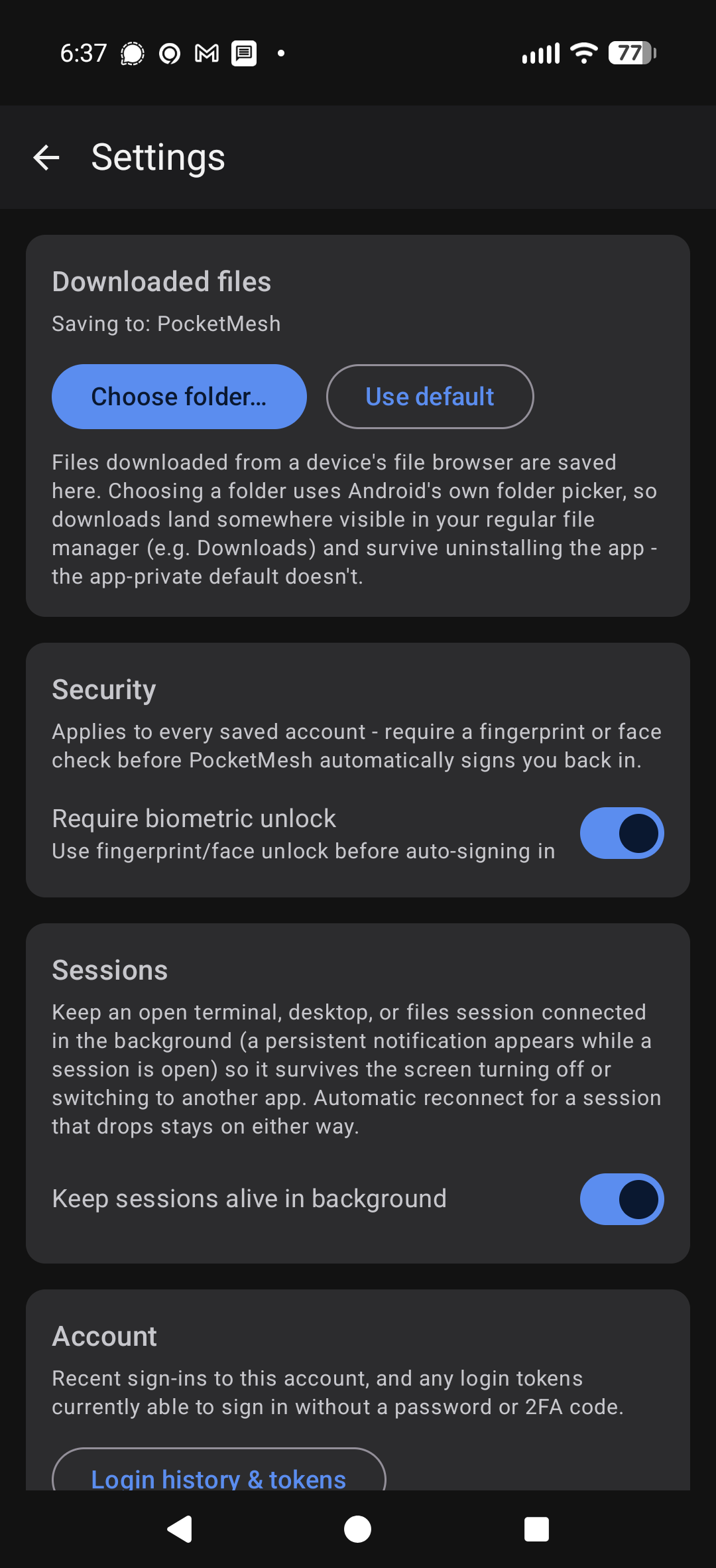
An optional app-wide fingerprint or face check, with credentials held in Android Keystore-backed AES-256 storage.
SCREENSHOTS
A closer look
FAQ
Common questions people ask.
Where does my data go?
Directly to your server. PocketMesh only connects to the MeshCentral instance you point it at, over the same control and relay protocols its web dashboard uses, without a relay, cloud account, or third party in between.
Does it work if my server uses two-factor authentication?
Yes. PocketMesh supports 2FA at login, and after your first sign-in it mints a MeshCentral Login Token so you won’t need to enter a code on every reconnect. You can also save a TOTP secret and have the app generate fresh codes itself.
What about SSO accounts (Google, Azure AD, Okta, SAML)?
MeshCentral’s SSO login is a browser-redirect flow that this app doesn’t implement. Instead, create a Login Token from My Account → Login Tokens in the MeshCentral web UI, then enter that token user and password into PocketMesh, which is the officially supported way for API/CLI-style tools to act on an SSO account.
Is PocketMesh free?
Yes, PocketMesh is currently free.
Is PocketMesh open source?
No, PocketMesh is currently not open source, but may be in the future. MeshCentral itself, which PocketMesh connects to, is open source.
Can I connect more than one server?
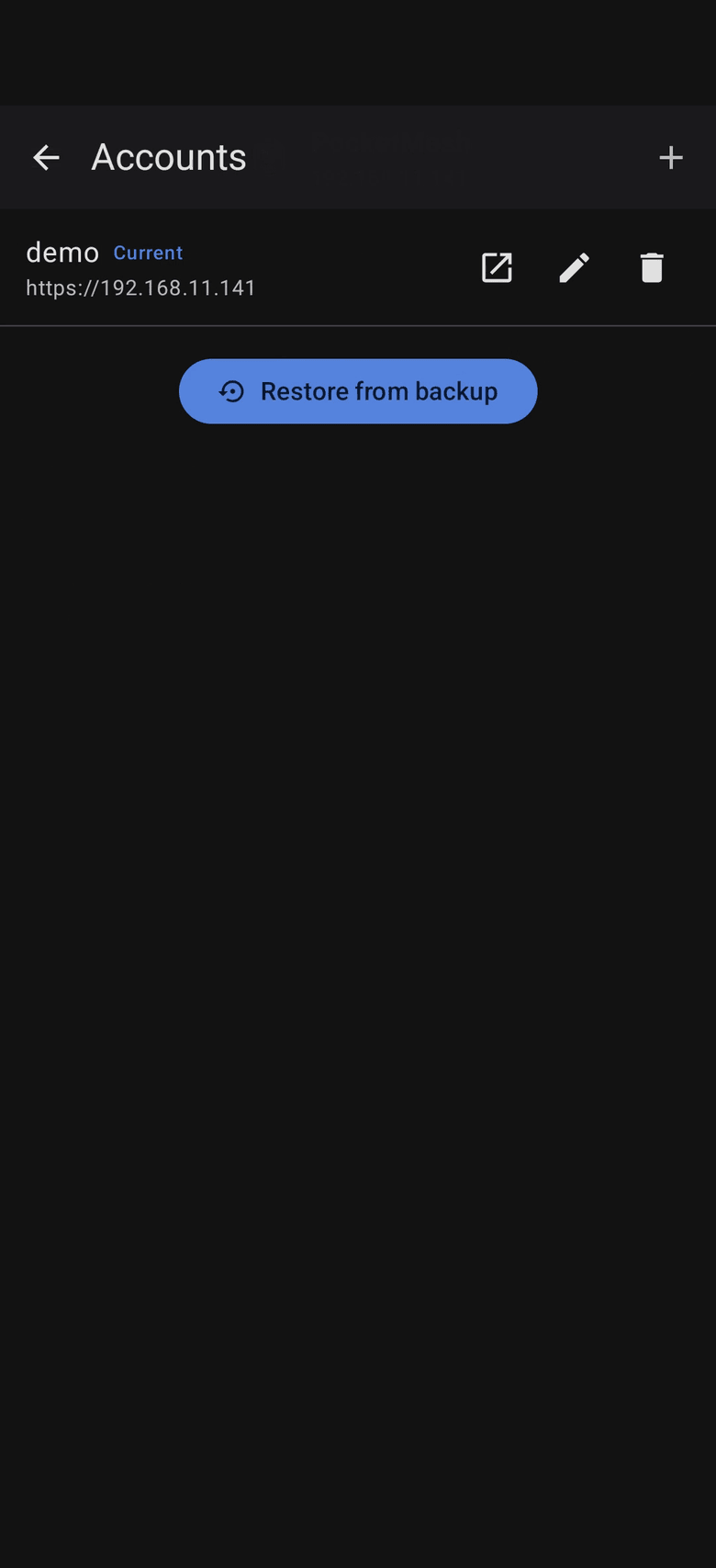
Yes. The Accounts screen shows you the saved servers, and you can add, edit, switch, and remove logins all from there.
Which MeshCentral versions are supported?
PocketMesh talks to MeshCentral’s control.ashx and meshrelay.ashx endpoints directly, tested against MeshCentral’s own source. It’s built and tested against recent MeshCentral releases; older versions may work but aren’t guaranteed.
Does PocketMesh support SSH terminal sessions?
Not yet. MeshCentral’s SSH relay is a separate endpoint from the agent terminal PocketMesh currently uses.
Is PocketMesh "vibe coded"?
PocketMesh development uses AI responsibly. Please see the full AI disclosure at the bottom of this page.
Why is the app free? Where do you make your money?
I wrote PocketMesh for myself after feeling frustrated about the lack of options. I’m making it publicly available to all because without MeshCentral, this app wouldn’t exist, so it’s only right to follow MeshCentral’s free model.
Will this app be released in the Google Play Store?
Developer accounts for the Google Play Store cost money and this app is free. If I released it in the Play Store, I would have to charge for the app to make back that money, which I do not want to do.
Would you be open to collaborating with someone else to release it in the Play Store?
Yes. Please email me (admin) to collaborate. This domain name is the second part of the address.
Will this app be released to F-Droid?
If the app becomes open source, I will release it to F-Droid.
How are my login credentials protected?
PocketMesh prefers minting a MeshCentral Login Token over storing your real password, and either way, whatever it stores lives in EncryptedSharedPreferences (AES-256-GCM, key held in the Android Keystore). An optional app-wide biometric lock adds a fingerprint or face check before saved credentials are used to auto-connect.
What endpoints does the app communicate with?
PocketMesh only communicates with the MeshCentral servers you have added and GitHub. Once every 12 hours, or if you hit the check now button, PocketMesh checks the release versions to see if an update is available. Your data is not sent to GitHub, rather it pulls the latest version number and compares it locally to the installed version.
Are you planning on adding <something>?
For all feature requests, please open a GitHub issue or discussion. In general, this app is not meant to replace the WebApp - the MeshCentral codebase is extensive and this app is meant as a mobile companion. Items like adding new device groups, user management, server file management, traces, agent consoles - these are all things I don’t think belong in a mobile app. However, I’m open to suggestions and always looking to make the app better.
DOWNLOADS & SUPPORT
Download the app today!
PocketMesh is hosted on GitHub.
Found a bug?
Open an issue on GitHub with your MeshCentral version, PocketMesh version, how you got to the bug, and what you saw.
Report an issue →AI USE DISCLOSURE
I understand the reservations surrounding AI-generated software. Relying on a tool to write code without fully understanding either the tool or the output is risky and many wish to avoid it. However, developer assistance tools like autocomplete or online reference platforms have been standard practice for years before AI came on the scene.
Both the PocketMesh app and website were developed with the help of AI coding assistants. Depending on the task, this assistance ranged from simple word completion to refactoring functions for modern best practices. Crucially, every line of code was individually reviewed, vetted, and thoroughly tested by me.
Finally, AI involvement is strictly confined to the build process: the PocketMesh application itself contains no embedded AI features or runtime models.